Winner
The IPCL management is proud to announce
Hajime Shimizu
as the winner of the 3rd IPCL Composition Competition
for his work "Rhythmic Responses"
The winning work “Rhythmic Responses is awarded by 2500€ and will receive its world premiere in February 2027 during the Semifinal round of the 2027 Percussion Mallet Duo Competition.
Hajime Shimizu
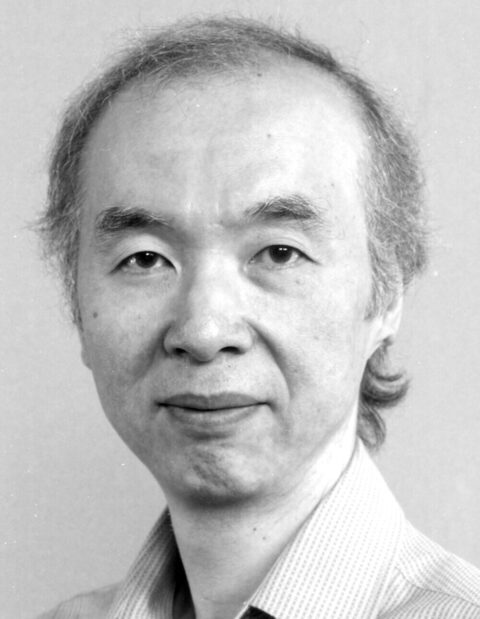
Hajime Shimizu, a Japanese composer, pianist, and conductor, was born in Yokohama in 1961. Already in his teens, he won several composition awards and gained conducting experience with his high school orchestra. From 1982, Shimizu studied composition at Tokyo University of the Arts with Mareo Ishiketa, Teizo Matsumura, Shozo Maruta, Kenjiro Urata, and Izumi Yamada, and piano with Yoko Kanno. Until completing his master’s degree in 1989, he was also active as a freelance pianist and conductor. After earning his degree, he studied composition with Kurt Schwertsik and conducting with Karl Österreicher at the University of Music and Performing Arts Vienna. He later continued his studies in musicology with Hartmut Fladt at the same university and studied composition with HK Gruber at the Vienna Conservatory.
Shimizu's compositions range widely from chamber music and orchestral works to vocal pieces. In addition to works employing traditional Western compositional techniques, he has also developed a distinctive musical language inspired by his research into traditional Japanese music, for which he has received high acclaim. His first such work, Fantasy for flute, was recorded on a CD produced by the University of Music and Performing Arts Vienna and featured in the contemporary music festival Hörgänge, organized by the Wiener Konzerthaus in 1994. His next work, Invocation for chamber orchestra, was commissioned by the Erik Satie Foundation and premiered by the ensemble die reihe under the direction of HK Gruber at the same Hörgänge festival, receiving a warm reception. In 2015, his Listen to the Landscape for solo flute received an honorable mention at the composition competition Musique sans Frontières, organized by the Alvares Chamber Orchestra. In 2017, his Kazaogi (Calling the Wind) for string orchestra was selected as a finalist in the Krzysztof Penderecki International Composers’ Competition ARBORETUM. In 2023, his song cycle Our Summer made her light escape, based on poems by Emily Dickinson, won first prize in the Emily Dickinson in Music composition competition, organized by Sheva Collection.
Rhythmic Responses
The traditional music of cultures around the world reveals a remarkable diversity and offers unexpected ideas that even the most experienced composers might not readily conceive. From my late twenties through my thirties, I listened extensively to traditional music from all over the world, both Western and Eastern. However, as a native of Japan, it was traditional Japanese music that I studied most intensively.Regarding rhythm in traditional Japanese music, the virtuoso performance of complex interlockingrhythmic patterns by ensembles in Kabuki theatre is truly spectacular. Moreover, much like in the Japanese language itself, dynamic accent is not always clearly defined in traditional Japanese music. This ambiguity can give rise to unique forms of polyrhythm and polymeter.In composing Rhythmic Responses, I drew inspiration from the music of Kabuki and Noh theatre, as well as Kagura, the ritual music of Shinto. I conceived this piece to convey the diversity, excitement, vitality, and power of multiple rhythms intertwining through the dynamic interplay between two marimba players.
Hajime Shimizu