Set pieces
Preliminary round
Tiptoe - Georges Sadeler
Composer's note
With "Tiptoe," Luxembourgish composer Georges Sadeler presents a duo for vibraphone and marimba with additional glockenspiel, which musically captures the lightness of cautiously approaching on tiptoe. Delicate impulses and bright timbres open up the space before a groovy main theme unfolds. A floating middle section forms the contrast before the theme returns and intensifies until the end – energetic, concise, and with growing intensity.
Biography
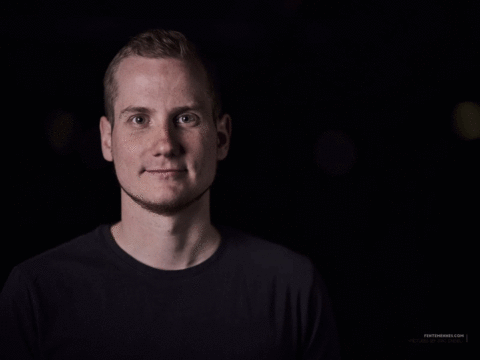
Georges Sadeler (*1988) is a Luxembourgish composer and arranger whose music combines expressive melodies, colourful orchestration and a modern musical language. His work is especially connected to the concert band repertoire, while his catalogue also includes chamber music, fanfare, brass band and symphonic music.
Alongside his work as a composer, Georges is a saxophonist with the Luxembourg Military Band as well as various other ensembles.
He began his musical education at the Conservatoire de la Ville de Luxembourg with the renowned Luxembourgish saxophonist and composer Marco Pütz. There, he developed not only his instrumental skills but also a strong understanding of musical interpretation. He later studied harmony, counterpoint, fugue and composition with Claude Lenners, one of Luxembourg's leading contemporary composers.
Rather than following a single stylistic school, Georges developed an interest in combining different musical influences to create his own distinctive voice. His background in classical and contemporary composition, together with his experience as a performer and his close connection to wind music, continues to shape his work.
Since 2017, Georges has received numerous awards at national and international composition competitions. Among the highlights are DOLOMITI, which won First Prize at the International Composition Competition Città di Allumiere in Italy, OUTBURST, winner of the Winds Composition Contest Saxony in Germany, and MARCHE GRAND-DUC GUILLAUME, which was selected in 2025 as the new official march for the future Grand Duke Guillaume of Luxembourg.
In 2023, Georges joined Symphonic Dimensions Publishing, where his works are distributed internationally. Today, with more than 60 compositions in his catalogue, his music covers a wide range of styles and ensembles and is performed throughout Europe.
Semifinal
Rhythmic Responses - Hajime Shimizu
Composer's note
The traditional music of cultures around the world reveals a remarkable diversity and offers unexpected ideas that even the most experienced composers might not readily conceive. From my late twenties through my thirties, I listened extensively to traditional music from all over the world, both Western and Eastern. However, as a native of Japan, it was traditional Japanese music that I studied most intensively.Regarding rhythm in traditional Japanese music, the virtuoso performance of complex interlockingrhythmic patterns by ensembles in Kabuki theatre is truly spectacular. Moreover, much like in the Japanese language itself, dynamic accent is not always clearly defined in traditional Japanese music. This ambiguity can give rise to unique forms of polyrhythm and polymeter.In composing Rhythmic Responses, I drew inspiration from the music of Kabuki and Noh theatre, as well as Kagura, the ritual music of Shinto. I conceived this piece to convey the diversity, excitement, vitality, and power of multiple rhythms intertwining through the dynamic interplay between two marimba players.
Hajime Shimizu
Biography
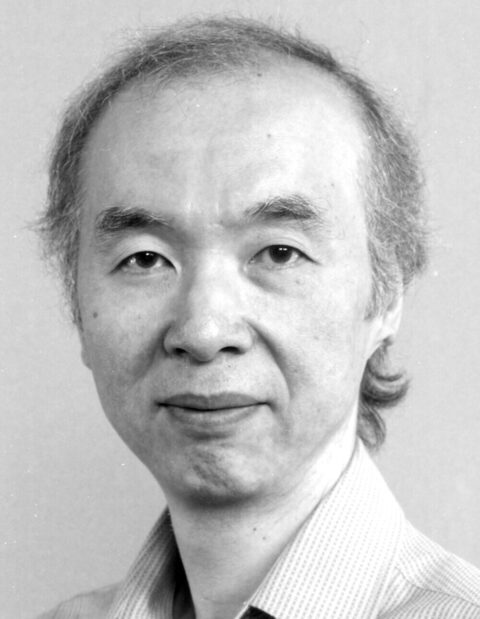
Hajime Shimizu, a Japanese composer, pianist, and conductor, was born in Yokohama in 1961. Already in his teens, he won several composition awards and gained conducting experience with his high school orchestra. From 1982, Shimizu studied composition at Tokyo University of the Arts with Mareo Ishiketa, Teizo Matsumura, Shozo Maruta, Kenjiro Urata, and Izumi Yamada, and piano with Yoko Kanno. Until completing his master’s degree in 1989, he was also active as a freelance pianist and conductor. After earning his degree, he studied composition with Kurt Schwertsik and conducting with Karl Österreicher at the University of Music and Performing Arts Vienna. He later continued his studies in musicology with Hartmut Fladt at the same university and studied composition with HK Gruber at the Vienna Conservatory.
Shimizu's compositions range widely from chamber music and orchestral works to vocal pieces. In addition to works employing traditional Western compositional techniques, he has also developed a distinctive musical language inspired by his research into traditional Japanese music, for which he has received high acclaim. His first such work, Fantasy for flute, was recorded on a CD produced by the University of Music and Performing Arts Vienna and featured in the contemporary music festival Hörgänge, organized by the Wiener Konzerthaus in 1994. His next work, Invocation for chamber orchestra, was commissioned by the Erik Satie Foundation and premiered by the ensemble die reihe under the direction of HK Gruber at the same Hörgänge festival, receiving a warm reception. In 2015, his Listen to the Landscape for solo flute received an honorable mention at the composition competition Musique sans Frontières, organized by the Alvares Chamber Orchestra. In 2017, his Kazaogi (Calling the Wind) for string orchestra was selected as a finalist in the Krzysztof Penderecki International Composers’ Competition ARBORETUM. In 2023, his song cycle Our Summer made her light escape, based on poems by Emily Dickinson, won first prize in the Emily Dickinson in Music composition competition, organized by Sheva Collection.
Final
Gedankenkarussell - Pol Belardi
Composer's note
I was commissioned to write the set piece for the final of IPCL 2027 already somewhere through 2023. The date was postponed a few times due to various reasons, and so was my deadline. Since I have a complicated relationship with deadlines, I gathered a few ideas and sketches but did not finish the piece for quite a while. As a composer (as well as a human being in general), I tend to constantly overthink things that I create and that happen around me. This led to a problem: I was not happy at all with my initial ideas, and the deadline in 2026 approaching quite fast, I took 2 decisions:
- the title for the existing piece was changed to “Gedankenkarussell” since that term accurately reflected my overthinking mind (in general, but specifically when it came to auto-evaluating this music)
- I started a second try from scratch, going into a quite different direction (given the situation, this work got the title “Geistesblitz”
I ended up with 2 finished ideas (without the orchestration), nervously showing them to the board of IPCL. To my great relief, they liked both ideas.
The choice fell to “Gedankenkarussell”, so I finished the orchestration and produced what you are holding in your hand right now.
The second piece is planned to be released as well at a later stage.
With this in mind, one can musically understand this piece as a representing carousel, constantly turning, changing speed, and with a lot of different ideas and thoughts disrupting the balance and peace of mind. So, there should be a continuity and flow, but especially the long strains of 16ths notes should never sound too machine- or robotlike.
The musical signature IPCL is represented throughout the piece, as well as the year 2027, but that should not be over-emphasized. The orchestration is willingly kept transparent and sometimes sparse, as to not overpower the mallet duo, which should be the focus of attention. The orchestra serves as an amplification of select ideas and should always be serving and following the lead of the soloists.
Tempos are approximate indications; the performers are invited to find tempos that suit them better if wanted, without moving too far out of the range, though.
Rubato parts can be played freely and organically.
I avoided notating pedaling for the vibraphone player, since the music directs most of it through the note lengths. The rest will be covered by the performance experience of said player.
All this being said, I wish the performers good luck and a lot of pleasure diving into the universe of “Gedankenkarussell” and a great moment of musical sharing.
Biography
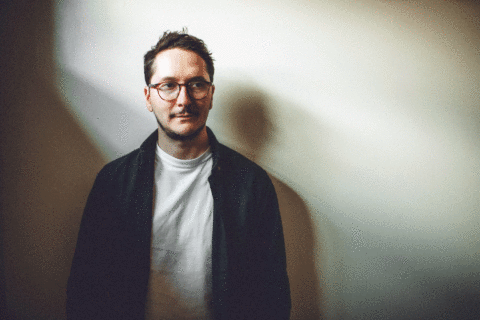
From the moment Pol played his first note on an instrument, sometime in the 90's in a small Southern Luxembourgish town called Tétange, his curiosity was awakened to create music. After extensive local studies, including percussion, piano, drums, bass and theory, a fair amount of classical orchestra as well as rock band experience and a good first imprint in the local scene, he set sails to study in Brussels and Amsterdam, earning a master's degree "cum laude" in jazz bass guitar in 2014. Throughout his entire career, he has forged himself a strong credo consisting of two main ingredients: polyvalence and creativity.
Critically acclaimed on various occasions, his projects vary in both conception of style and the instrument(s) he plays, and since the first childhood composition try-outs he has grown to a prolific composer who is not afraid of taking advantage of a large genre background.
In addition to hundreds of original works for his own bands and projects, his catalog includes commissioned compositions and arrangements by the Luxembourg Military Band, United Instruments of Lucilin, Radio 100,7, Rockhal, Ville de Luxembourg, University of Luxembourg, to name a few.
Now based in Luxembourg, the main drive for Pol's life is sharing his artistic vision as a bandleader, sideman, producer, composer (also film and theatre), arranger, radio presenter, teacher and actor.